nav-close
float feedback icon livechat

RM SOCIAL: COPY TRADING FEATURE LIVE NOW

YOUR GO-TO BROKER
FOR TRADING

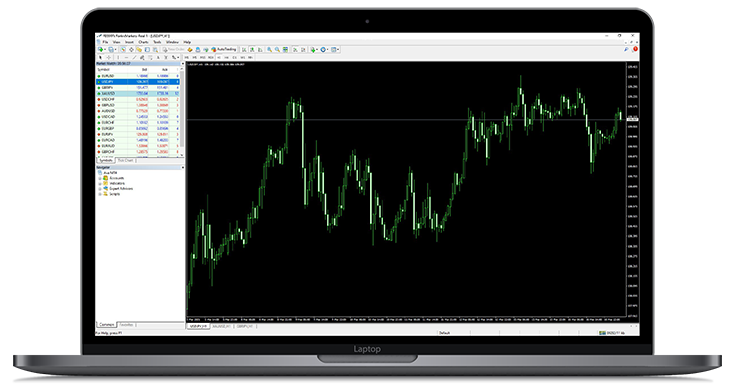
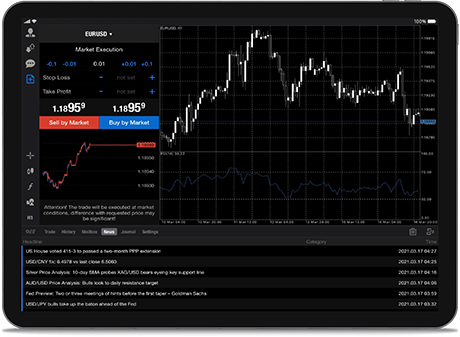
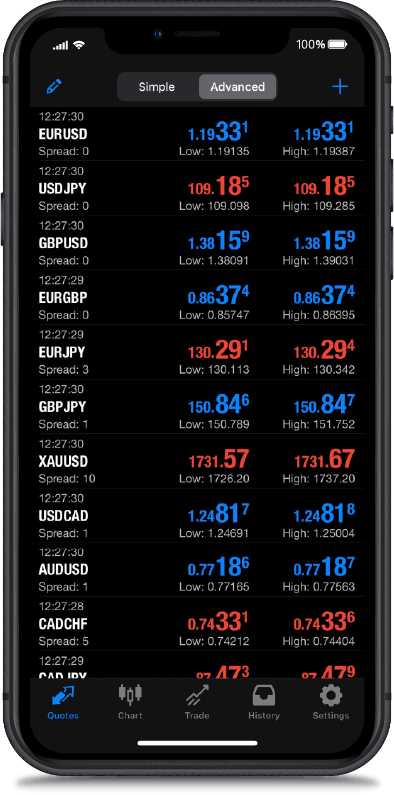
Access 1000+ products including Forex, Share CFDs, Indices and Metals with MetaTrader 4/5 Platforms

LIVE SPREADS

EUR / USD

SPREAD

0.00

BID

-----

ASK

-----

XAU / USD

SPREAD

0.90

BID

-----

ASK

-----

EUR / JPY

SPREAD

0.10

BID

-----

ASK

-----

USD / JPY

SPREAD

0.00

BID

-----

ASK

-----

GBP / USD

SPREAD

0.20

BID

-----

ASK

-----

Live prices are indicative only.

ENHANCE YOUR TRADING JOURNEY WITH US

Trade like never before with our optimal features. Our seamless and user-friendly platform enables you to navigate the markets with ease.

an icon says 0.0 pips, a feature of radex markets

#01

Spreads From 0

an icon says 0.0 pips, a feature of radex markets

#02

350+ Products Available

up to 1:500 leverage

#03

Up to 1:500 Leverage

3 base currency icon

#04

3 Base Currencies

your account manager icon

#05

Your Own Account Manager

live support icon

#06

Live Support 24/7

a PC for using MetaTrader, a forex platform

a Pad for using MetaTrader, a forex platform

a cellphone for using MetaTrader, a forex platform

FIND YOUR GEAR
IN TRADING

At RADEX MARKETS
we offer a full range of platforms
that meet your needs.

MARKET WATCH

Busy week ahead

December 2025

  ●  Double NFP drop on Tuesday   ●  Probable rate hike on the Yen   ●  Markets shy away from AI Investors flee from AI US stocks took a turn for the worse last Friday, as an increasing number of investors shied away from big tech companies. The tech-heavy Nasdaq Composite index shed 1.7%, while the S&P 500 lost 1.1% and the Dow Jones closed 0.5% in the red – the further removed from tech stocks, the lesser the damage. Many companies associated with the artificial intelligence space suffered on Friday, including Oracle (ORCL), which fell another 4.5% after incurring a double-digit loss the day prior. Fellow chipmakers Nvidia (NVDA) and Advanced Micro Devices (AMD) lost 3.3% and 4.8% respectively, while Broadcom (AVGO) plummeted over 11% following its latest earnings report, which failed to meet investors’ sky-high expectations regarding the company’s sales outlook. Despite the heavy selloff, the poor performance in technology stocks appears somewhat contained, with broader markets remaining relatively unaffected. There is a growing sentiment that AI valuations are overblown, and this has manifested in a pivot towards other sectors, as evidenced by the fact that the Dow gained over 1% last week, while the S&P 500 and Nasdaq both closed in the red. Precious metals remain in bid Gold continued to push higher last Friday, reaching highs over $4,350 before settling a hair’s breadth below $4,300. The precious metal started the week strongly this morning, rising back towards $4,340 in the early Asian session. Silver traders finally took some profit last week, lowering the white metal to a $61.91 weekly close, but the bid has once again returned as of this morning. The spotlight may turn elsewhere this week, this time to platinum, which is currently challenging $1,800 – a price not seen since 2011. The week ahead Traders have a lot to keep an eye on this week. Tomorrow, the Bureau of Labor Statistics will publish a special NFP report, which will include nonfarm payroll figures for both October and November, granting the publication additional weight. However, the report will only feature unemployment stats for November, because the household survey data was not collected in October due to the government shutdown. Tuesday and Wednesday will then provide back-to-back retail sales for October and November, while Thursday will see the publication of the latest CPI figures. The backlog is rapidly being cleared. Moving away from the United States, this week will also see three major central bank decisions. On Thursday, the Bank of England is expected to enact a rate cut of its own, lowering the interest rate on the Pound to 3.75% from 4% currently. Later in the day, the European Central Bank will in all likelihood hold rates on the Euro steady at 2.15%. Finally, the most anticipated decision of the week lies with the Bank of Japan, which, in the early hours of Friday morning, will probably increase rates on the Yen to 0.75% from 0.5% at present. The shift to higher rates could be acutely far-reaching because low borrowing costs on the Japanese Yen have long been a source of cheap credit to markets around the world. The unwinding of such could have a detrimental impact on a number of markets, particularly those susceptible to low liquidity conditions, such as cryptocurrencies. To put the adjustment in context, rates on the Yen have not been as high as 0.75% since 1995. Despite the looming threat, the Yen does not appear to be making any strong moves, while Japanese bond yields have increased steadily for many months already, suggesting the rebalancing is somewhat priced in. Time will tell. #Gold #Silver #AVGO #NFP

READ MORE
RM Rooms Icon

RM NEWS ROOM

RADEX MARKETS announces Black Friday Phase 2: 40% Commission Drop & Extended Cashback

16 December, 2025

RADEX MARKETS, an internationally regulated Forex and CFD broker, is pleased to announce the second phase of its Black Friday promotion, running from 15 December to 29 December 2025. This limited-time offer features a substantial 40% commission drop, providing traders with enhanced opportunities to maximise their year-end trading performance. Throughout the promotional period, clients will benefit from a 40% commission reduction on forex and gold trading, creating an exceptional opportunity to capitalise on market movements. Gold traders will also enjoy exclusive spread reductions, adding greater value for traders looking to trade precious metals. How to Participate For New Users: New clients can register directly through the Black Friday promotional page on the RADEX MARKETS website to immediately access the reduced commission rates.For Existing Users: RADEX MARKETS has extended its popular 25% cashback bonus from its original end date of 12 December through to 29 December. Existing clients can continue receiving $3 cashback for every lot traded until the promotion concludes, maximising trading returns throughout the extended period.Why Trade with RADEX MARKETS RADEX MARKETS remains committed to delivering exceptional trading conditions for clients worldwide. With access to over 1,000 trading products and competitive spreads, RADEX MARKETS provides a comprehensive trading environment designed for traders who value quality and reliability. This extended Black Friday promotion reflects RADEX MARKETS' ongoing dedication to client value, offering enhanced trading conditions and rewarding opportunities to help traders achieve their financial objectives. For more information about RADEX MARKETS and future events, please visit here. About RADEX MARKETS: RADEX MARKETS, a Seychelles-based Financial Broker, is a trading name under GO Markets International Ltd Co (No. 8425985-1, Securities Dealer Licence No SD043). It provides a platform to trade financial products, such as Forex, Metals, CFD/Indices and Share CFDs. For PR requests, please contact Henry Huang [email protected] +44 20 8610 1608 Disclaimer: This press release is for informational purposes only. The information provided does not constitute investment advice or an endorsement of any products or services.

READ MORE

ECONOMIC CALENDAR

( GMT +03:00 13:06 )
March 26, 2024
2025-12-16 13:00:00+00:00PLCore Inflation Rate YoY Nov
2025-12-16 13:30:00+00:00USNon Farm Payrolls Oct
2025-12-16 13:30:00+00:00USUnemployment Rate Nov

TRADER'S PICK

Stock splits and behavioural finance

December 16, 2025

A stock split is exactly what it sounds like. A company splits its stock by increasing the number of outstanding shares, while decreasing the price of each one. A share may be divided into two, three, ten or more, with the cost of acquiring one share adjusting accordingly. The total market capitalisation of the company remains unchanged. Companies tend to perform stock splits when their share prices are high. Nvidia (NVDA) completed a 10-to-1 split in June 2024, at which time the company was trading at $1,200 per share. Following the split, each share was divided into ten shares, each worth $120. Nothing fundamental about the stock changed, merely a change of numbers. Companies can go through multiple rounds of stock splits. In fact, since going public in 1999, Nvidia has completed six separate stock splits, dividing one share at launch into a total of 480 shares today. The chipmaker is by no means an outlier; Home Depot and McDonald’s have undergone 13 and 12 stock splits respectively in their time. Stock splits have been around for a long time. The first examples, according to modern definitions of such, date back to 1916. American Can and American Tobacco both performed a stock split that year, following the same reasoning still used to this day: to make their shares more accessible to the average investor. Over a century later, the trend is still going strong, and by and large follows the same logic. Why do companies perform stock splits? The argument is that acquiring a share is more difficult for an average investor if the price tag is too high. Many stocks had a large barrier to entry because of this, which excluded a number of buyers. Even among those who could afford to buy higher-priced stocks, the perception that the company represents some kind of luxury good can deter some investors. By bringing their price down to more reasonable levels, the shares become more available, thereby expanding the potential pool of buyers. Moreover, a greater number of lower-priced shares results in greater liquidity, which may narrow the bid-ask spread, making life easier for buyers and sellers alike. Things changed considerably in late 2019, when Robinhood introduced fractional trading to its customers, allowing people to buy fractions of a share in a given company. Other competing platforms quickly implemented similar solutions, and over the past five years fractional trading has become widely available. As a result, the process of splitting a stock now makes a lot less sense than it once did. This begs the question of why Nvidia bothered to do one last year. If investors are free to buy only a fraction of a share, what is the point of a stock split? The answer is in fact mostly psychological. On a basic level, if a company is undergoing a stock split, or even thinking about one, it is because their share price has appreciated significantly in recent times, which is an obvious selling point for the stock itself, one that may potentially attract new investors. Such a factor certainly plays a role, but there is also a much deeper element at play: the notion of perceived affordability. Reverse stock splits As an aside, stock splits can also go the other way, consolidating a large number of shares into fewer, reducing the amount of shares outstanding. Such events are known as reverse stock splits, and typically occur when a company is in trouble. While a regular stock split is good publicity, a reverse stock split is generally a red flag. If a stock continuously underperforms, its share price may fall below the minimum price requirement of the exchange, meaning the stock will get delisted if stays too low for too long. For example, the New York Stock Exchange maintains a strict $1 price threshold, below which the associated company will eventually receive a deficiency notice. One of the most famous examples of a reverse stock split is the shipping company DryShips Inc (DRYS), which completed no fewer than eight such operations between 2016 and 2017. The company performed split after split in an attempt to counter the stock’s shockingly bad performance, desperately trying to remain listed on the stock exchange. The successive consolidations made for a combined reverse stock split of 1-to-11,760,000 shares. At one point, the company was facing ten separate class-action investor lawsuits, with accusations ranging from stock manipulation to violating American securities laws. Investment psychology For reasons that have nothing to do with logic, investors are more comfortable investing in assets when they lie within a specific price range. A high price tag can scare people away because they think that it is a sign that something is overvalued. The assumption is that an asset worth $1,000 must be overvalued compared to one that is only worth $3, and therefore the latter is a better investment. Such an argument is obviously nonsensical because it ignores the market cap of the company. Sticking with chip manufacturers, let us compare Nvidia (NVDA) and Advanced Micro Devices (AMD). Nvidia has a share price of $177; AMD has a share price of $217. Is AMD “worth” more than Nvidia? Of course not, because Nvidia has over 24 billion shares outstanding, granting the company a market cap of $4 trillion, whereas AMD has just 1.6 billion shares outstanding, granting the company a market cap of $350 billion. Most people in investment circles are obviously aware of how market cap works and why investing in assets based on price alone is silly. But a small part of our brain sees the high price tag and gets skittish. Multiply that niggling feeling by the millions of people who subconsciously experience it, and suddenly there is a very real, tangible effect. The same phenomenon is arguably more pronounced in cryptocurrencies, which, to put it mildly, has its fair share of inexperienced market participants. People flock to “lower priced” coins for no other reason than the price tag, blissfully unaware of the concept of market capitalisation. To each their own. The point is, companies are wise to this effect. Companies will initiate stock splits in order to bring their share price right down to the sweet spot, whether they publicly admit it or not. Many cryptocurrencies are guilty of the same. There are costs associated with performing a stock split, including legal fees and administrative work, so the fact that companies will pursue such ventures, despite the cost of doing so, points to the lucrative nature of these operations. A stock split attracts a lot of attention. A share price going up so much that the company has to undergo a split? What is not to like? The hype surrounding such an event does indeed typically result in a surge of interest, and a rise in price. Such effects are meticulously monitored and studied, with many believing the $30 to $300 range being ideal in terms of optics for potential buyers. $1,000 price tags put people off just as much as sub-$1 prices. Interestingly, the acceptable range appears to vary by region, with different parts of the world preferring different price bands. If investors acted purely on logic, the price of a stock or crypto would not matter at all – market cap would be all that mattered. Unfortunately, we are not as clever as we think. Perception matters more than we would like to admit. With that said, some stocks are completely immune to such notions, such as Berkshire Hathaway, whose class A shares have never undergone a single stock split since their initial listing in 1988. BRK.A hit a share price of over $800,000 earlier in the year. That is not a decimal point. Eight hundred thousand dollars per share. The argument that markets are irrational is one that needs little justification; it is obvious for all to see. Stock markets, and financial markets in general, are a collection of human emotions. As the saying goes: “Markets can remain irrational longer than you can remain solvent.” The quote is attributed to John Maynard Keynes, renowned economist, who despite his expertise, lost significant amounts of money in the 1920s. Keynes would eventually learn his lesson, pivoting his bets towards much longer time frame plays. He would go on to run the endowment for King’s College, Cambridge, consistently beating the market, year after year, for over two decades. Reality usually catches up; it just takes a while.

READ MORE
LiveChat
livechat

Risk Warning : Trading derivatives and leveraged products carries a high level of risk.

OPEN ACCOUNT
to top icon